Why Are UPVC Windows and Doors Ideal for Modern Indian Homes?
Open your window on a peak Indian summer afternoon, and you invite the heat, dust, and street noise straight in. Shut it, and the room turns stuffy. For decades, homeowners lived with this trade-off, until uPVC rewrote the rules.
Today, from Chandigarh high-rises to Chennai villas, uPVC windows and doors are becoming the smartest upgrade in modern homes. They block the heat, silence the chaos, shrug off the monsoon, and barely ask for any upkeep. If you’re building or renovating in 2026, here’s why uPVC windows and doors for homes have earned their place as India’s new standard.
First, What is UPVC, and Why the Hype?
uPVC stands for unplasticised polyvinyl chloride, a rigid, lead-free plastic that doesn’t bend, rot, or react to weather like old materials do. The magic is inside the frame: it’s built with multi-chamber profiles (think of tiny sealed air pockets) and reinforced with galvanised steel. Those air chambers trap heat and sound, while the steel core gives the frame the strength to stand tall in windows, sliding doors, and large glass façades.
In simple words, uPVC gives you the warmth of wood, the strength of metal, and the maintenance of neither. That’s why it has moved from a “premium import” to a mainstream choice in Indian homes.
Built to Survive India’s Brutal, Mood-Swinging Weather
India isn’t one climate. It’s six seasons in one country. Delhi fries at 45°C, Mumbai drowns every monsoon, Jaipur chokes on dust, and Kochi battles salty coastal air. A single frame has to handle all of it, and this is where UPVC windows shine.
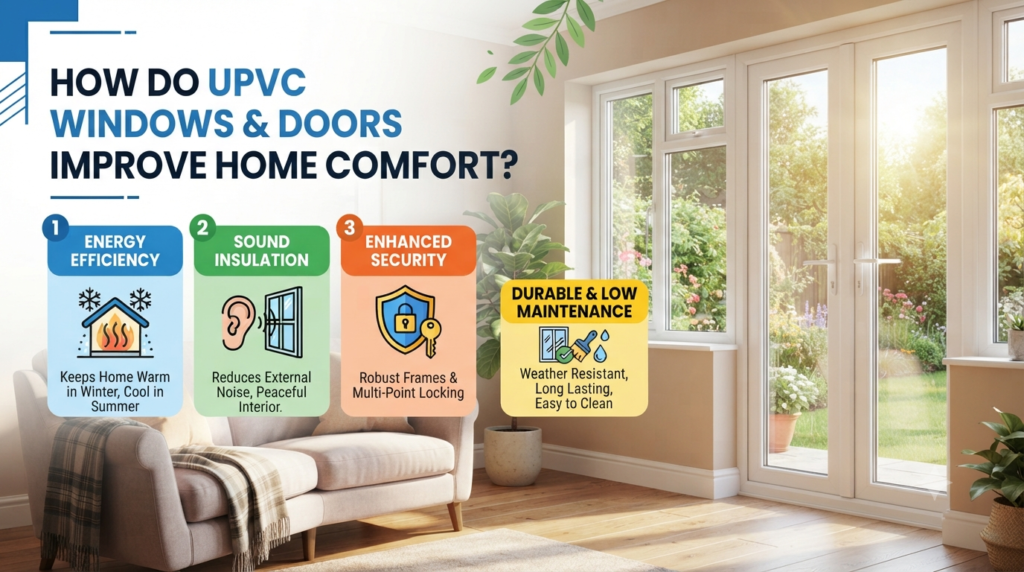
The multi-chamber design acts like a thermos for your home. It slows down heat transfer, so your rooms stay cooler without the AC running non-stop. Industry data from leading manufacturers suggests well-sealed uPVC windows can cut cooling and electricity bills by up to 30% — a real saving when summer power bills cross the roof. The tight weather seals also lock out dust and pollen, which is a quiet blessing for anyone with allergies or living near busy roads.
The monsoon is the real test, and uPVC passes easily. It doesn’t absorb water, swell, warp, or grow mould. UPVC doors come with sloped gradients and drainage channels that push rainwater out instead of letting it seep in. Add UV-stabilised formulation, and the frames won’t fade, yellow, or turn brittle even after years of harsh Indian sun.
Finally, Some Peace and Quiet
City life is loud — traffic, horns, construction, loudspeakers. uPVC fights back. The combination of multi-chambered frames, double glazing, and airtight seals can reduce outside noise by up to 40 dB.
To put that in perspective, that’s roughly the difference between standing next to a busy highway and sitting in a quiet library. For homes near airports, markets, or main roads, this alone makes the switch worth it.
Almost Zero Maintenance (Yes, Really)
Wooden windows demand polishing. Aluminium corrodes and pits near the coast. uPVC asks for almost nothing. Here’s what you don’t have to worry about:
- No painting or polishing — ever. A wipe with a damp cloth and mild soap keeps them looking new.
- No termites, no rust, no rot — uPVC is immune to pests, moisture, and corrosion that destroy wood and metal.
- No fading or cracking — the colour and finish are built to last 25–30 years with basic care.
That “fit and forget” quality is exactly why busy homeowners and builders keep choosing it.
Safe, Stylish, and Surprisingly Green
uPVC isn’t just practical. It’s secure and good-looking too. Frames come with multi-point locking systems and are paired with toughened or laminated glass, making forced entry genuinely difficult. The material is also inherently fire-retardant and self-extinguishing. It doesn’t support a flame the way many materials do, adding a quiet layer of safety most people never think about.
On looks, you’re spoilt for choice. uPVC comes in casement, sliding, tilt-and-turn, and fold-and-slide styles, plus wooden-finish laminates and rich colour options — from classic white and cream to bold anthracite grey and black. So whether your home is minimalist modern or warm traditional, there’s a frame that fits the vibe.
And for the eco-conscious: uPVC is 100% recyclable, uses less energy to produce than aluminium, and its insulation directly lowers your carbon footprint by reducing power use. A greener home that also saves money — that’s a rare win-win.
Quick Facts Worth Remembering
- Lifespan: 25–30+ years with minimal care
- Energy saving: up to 30% on cooling bills
- Noise cut: up to 40 dB with double glazing
- Weatherproof: rain, dust, UV, coastal salt — all handled
- Upkeep: just soap and water, no painting
Choose a Trusted Name: UPVC Aluminium
Here’s the honest truth: a uPVC window is only as good as the brand that makes it. Cheap, under-reinforced frames sag, leak, and disappoint within a few years. That’s why your choice of manufacturer matters more than the material itself.
UPVC Aluminium is among the most trusted UPVC manufactures in India, delivering premium uPVC and aluminium windows and doors for homes, villas, apartments, offices, and commercial projects pan-India. With 10+ years of precision engineering, 100+ completed projects, and a 100% satisfaction guarantee, every unit is built for Indian conditions — argon-filled double/triple glazing, structurally reinforced frames, warm-edge spacers, UV resistance, and a solid 10-year warranty.
From casement, sliding, and tilt-and-turn windows to fold-and-slide and lift-and-slide doors — all customisable in wooden finishes and rich colours — UPVC Aluminium turns everyday spaces into comfortable, quiet, energy-smart homes.
Call now: +91 9464670961 | upvcaluminiumindia@gmail.com — get a customised quote for your home today.
FAQs
1. Are uPVC windows and doors better than aluminium or wood for Indian homes?
Ans: For most Indian homes, yes. uPVC beats wood on moisture, termites, and maintenance, and beats aluminium on heat and sound insulation. Aluminium still wins for very large spans, which is why many homes use both smartly.
2. Do uPVC windows really reduce electricity bills?
Ans: Yes. Their multi-chamber frames and double glazing slow heat transfer, easing the load on your AC. Well-installed units can lower cooling costs by up to 30%, with savings adding up year after year.
3. How long do uPVC doors and windows last in India?
Ans: With basic care, quality uPVC doors and windows last 25–30 years or more. They resist rust, rot, UV, and corrosion, so they won’t crack, fade, or warp like wood or metal frames do.
4. Is uPVC safe during the monsoon and heavy rain?
Ans: Absolutely. uPVC doesn’t absorb water, swell, or grow mould. With sloped drainage channels and airtight seals, uPVC windows keep rain, leaks, and dampness firmly outside your home.
5. Does uPVC need a lot of maintenance?
Ans: Not at all. There’s no painting, polishing, or sealing required. A simple wipe with soapy water a few times a year keeps uPVC windows and doors looking fresh for decades.
Planning New Windows or Doors?
Talk to our experts for a customised uPVC or aluminium solution and a free quotation.
Get a Free Quote